
*View accurate shipping rates and availability
Australia's #1 online bathroom retailer
Australia's #1 online bathroom retailer
Over 1M+ products shipped
60 day extended returns


143 Items
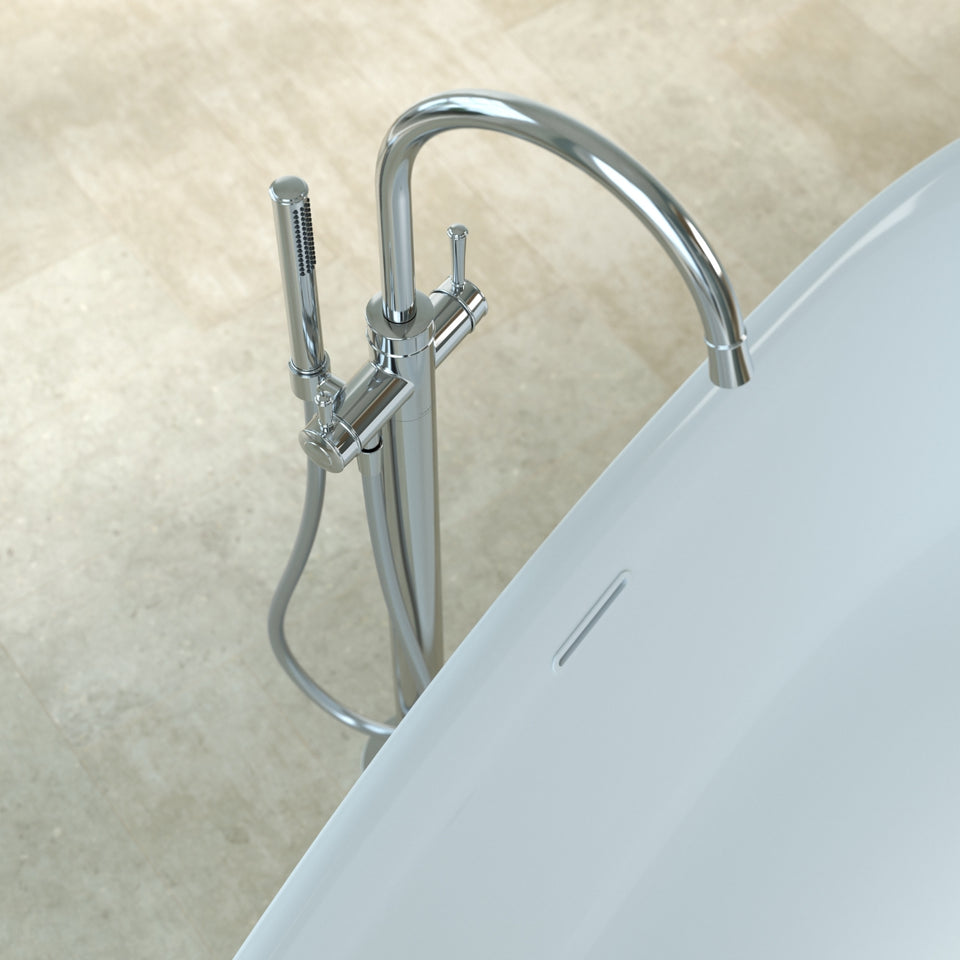

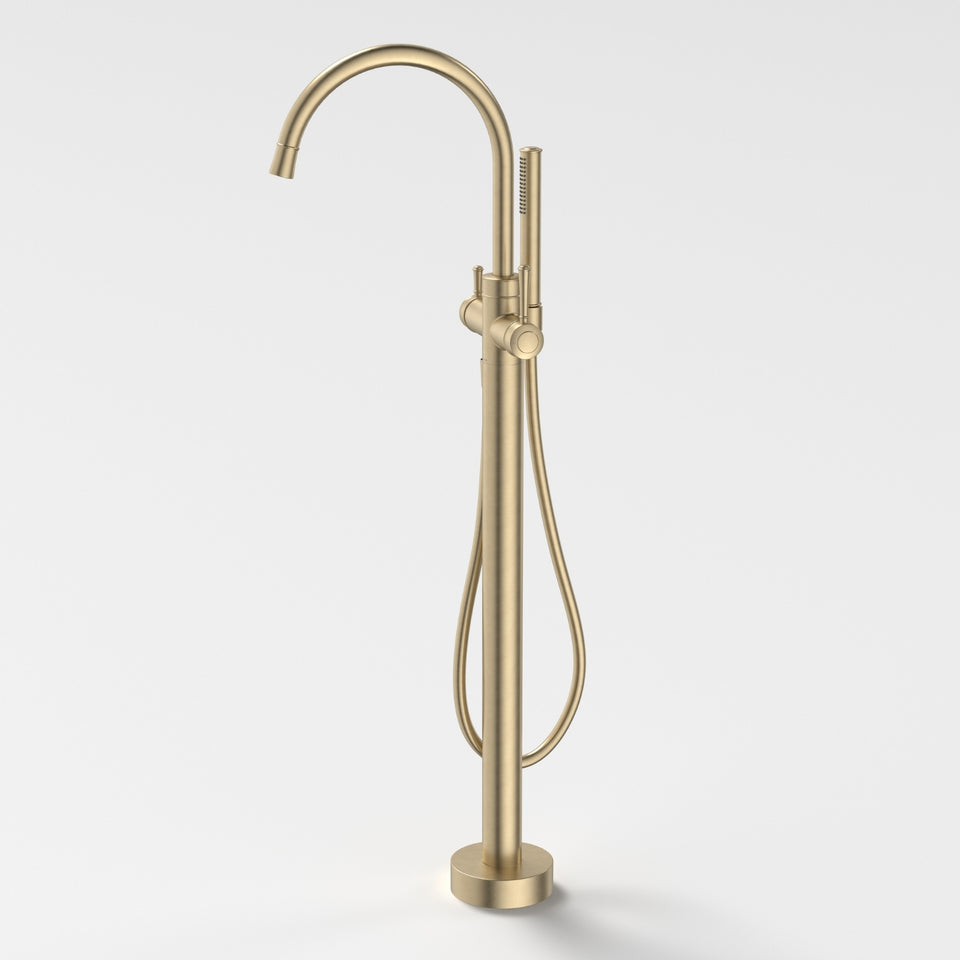
A freestanding bath genuinely needs its own kind of tap: since there's no wall to mount to, the mixer rises from the floor itself, a considered piece of hardware in its own right rather than an afterthought.
A freestanding mixer suits an island bath, one positioned away from every wall, or a back-to-wall bath wanting the elevated look of floor-mounted tapware without a fully exposed installation. It's genuinely well suited to a master ensuite where the bath itself is the room's focal point, centred under a window or skylight with the mixer standing beside it. Checking the floor structure, concrete slab or timber, before committing is worth doing, since it changes how straightforward the installation will be.
A bath filler is essentially a spout alone, sleek and minimal, but it requires a separate mixer valve to control temperature, worth factoring into the overall installation. An all-in-one mixer builds the handle into the pole itself, keeping temperature and flow control in one place. A mixer with a hand shower adds a diverter and hose attachment, genuinely useful for rinsing the bath down, washing a child's hair, or filling a bucket without needing to reach for a separate tap.
Phoenix's Cromford, Vivid Slimline, Nostalgia and Mekko ranges span floor-mounted bath mixers with and without an integrated hand shower, across brushed nickel, brushed gold, chrome, matte black and brushed carbon. Caroma's Urbane II and Liano II freestanding bath fillers cover matte black, brushed brass, chrome, brushed nickel and gunmetal. Meir's Freestanding Round, Paddle Round and Pinless Round ranges bring a hand spray option across black, chrome, champagne and Tiger Bronze, each carrying a genuine lifetime warranty. Nero's Mecca Round freestanding mixer with hand shower rounds out the collection in brushed gold.
This collection spans black, bronze, brushed nickel, champagne, chrome, gold, gunmetal and white, giving genuine flexibility to match a freestanding mixer to the room's existing basin tapware, or to let it stand as a deliberate contrast beside the bath.
Since the tap isn't fixed to a wall, the bath can be positioned wherever suits the room, centred, angled into a corner, or set beneath a window, rather than being limited by where the wall studs happen to sit. A floor-mounted mixer also adds genuine vertical height to a room that's typically low-set with a toilet and tub, and can be positioned near the point of entry to the bath, letting the water be turned on before stepping in rather than reaching across a full tub.
Spout reach matters more here than with any other tap type: measuring the distance from where the mixer will sit on the floor to the inside of the bath rim confirms the water falls cleanly into the bath rather than trickling down the side. Rough-in timing is critical, since the plumbing supply needs to be brought up through the floor slab or subfloor to the exact mixer location before waterproofing and tiling take place, not decided afterward. Stability depends on a solid mounting bracket secured to the sub-floor rather than the tiles alone, since an unsecured tall mixer can wobble with use. Water pressure also needs checking, since water travelling up a tall pipe needs decent pressure to flow well; a gravity-fed system with low pressure may need a booster pump or a specific low-pressure model.
Freestanding floor-mounted bath mixers require careful planning before installation, this isn't something decided after tiling is complete. The plumbing supply needs to be brought up through the floor slab or subfloor to the exact mixer location before waterproofing takes place, worked out with a plumber early in the renovation. Measuring the spout height carefully against the bath's rim height also matters, since the water must fall clearly into the bath, not trickle down the rim.
A freestanding bath is a bathtub that stands independently on the floor with no enclosing walls or built-in surround, visible on all sides and typically the centrepiece of the bathroom. Freestanding baths suit larger bathrooms where there's adequate floor space around the unit, and remain one of the most popular design choices in Australian master bathrooms and ensuites.
Standard freestanding baths in Australia range from 1400mm to 1800mm in length. A 1500mm bath suits most adults comfortably and fits in an ensuite with a floor area of around 2.5m² to 3m² or more, while a 1700mm bath offers a more generous soak. Measuring the available floor space and allowing clearance on all sides, for both plumbing access and aesthetic breathing room, matters before deciding.
Regular cleaning with mild soap and water keeps most finishes looking their best. Drying the tap after each use helps prevent water spots and tarnishing, and abrasive cleaners are worth avoiding since they can dull or damage the finish over time.
A freestanding bath mixer is easiest to finalise once the bath itself and its exact floor position are confirmed, since spout reach and rough-in location both depend on those decisions. The Blue Space's Freestanding Baths and Bath Wastes collections are worth reviewing alongside a mixer selection to bring the full bathroom together.
Freestanding floor-mounted bath mixers require careful planning before installation, this is not something that can be decided after tiling is complete. The plumbing supply needs to be brought up through the floor slab or subfloor to the exact location of the mixer before waterproofing takes place. You will need to work with your plumber early in the renovation process to confirm the rough-in position. You should also measure the spout height carefully against your bath's rim height, the water must fall clearly into the bath, not trickle down the rim.
A freestanding bath is a bathtub that stands independently on the floor with no enclosing walls or built-in surround, it's visible on all sides and is typically the centrepiece of the bathroom. Freestanding baths suit larger bathrooms where there's adequate floor space around the unit. They are one of the most popular design choices in Australian master bathrooms and ensuites.
Standard freestanding baths in Australia range from 1400mm to 1800mm in length. A 1500mm bath suits most adults comfortably and fits in ensuites with a floor area of around 2.5–3 sqm or more. A 1700mm bath offers a more generous soak. Always measure the available floor space and allow clearance on all sides for both plumbing access and aesthetic breathing room.


Switch to your local store for faster shipping and local deals.


