
*View accurate shipping rates and availability
Australia's #1 online bathroom retailer
Australia's #1 online bathroom retailer
Over 1M+ products shipped
60 day extended returns


42 Items




Spend over $800 and receive free gifts in your cart. Towels, accessories and full length mirrors!
Find Out More

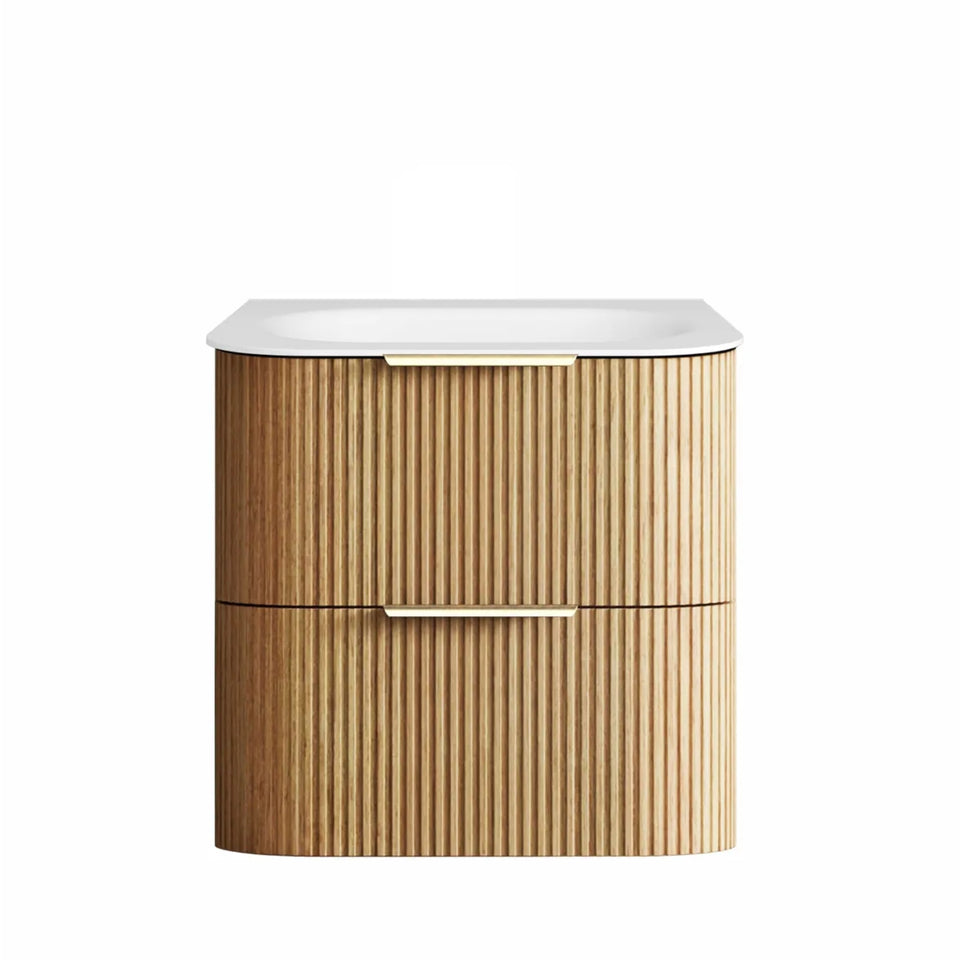
Otti's genuine strength is textural variety: fluted fronts, soft curved edges, and a wave-board detail all sit within the one brand, giving a bathroom renovation real scope to choose a specific character rather than a single, uniform look.
Byron is genuinely the most versatile range, with a fluted Woodland Oak front paired across matte white, pure white, natural Carrara marble, cloudy Carrara and ceramic tops, alongside a Sable Walnut ceramic-top option and a slimline top variant. Laguna Mk II spans woodland oak, black oak and matte white cabinet finishes, each paired with a genuine choice of cloudy Carrara, matte white, pure white, natural Carrara marble or ceramic tops, with an undermount basin option across all three cabinet colours. Bondi brings a fluted curved front in white, natural oak and black oak. Hampshire offers a curved white front. Noosa's wave-board detail pairs with a slimline ceramic top or a natural Carrara marble top with an undermount basin. Mini Ensuite, at a genuine 400mm, brings a fluted front in matte white or Sable Walnut with an integrated basin, suited to a genuinely compact powder room or ensuite.
Ceramic gives a moulded top-and-basin-in-one, genuinely easy to clean with no seams. Matte white and pure white solid surface tops bring a clean, contemporary finish. Cloudy Carrara and natural Carrara marble bring genuine stone character and veining, pairing particularly well with Otti's timber-fronted ranges. Slimline tops suit a narrower bathroom wanting the same considered finish in a reduced depth.
Woodland Oak and Sable Walnut bring genuine timber warmth and grain variation, suited to a coastal or Hamptons-style bathroom. Black Oak offers a darker, more contemporary timber tone. Matte white and white finishes keep the cabinet itself neutral, letting a stone-look top or the room's tapware carry the visual interest instead.
An integrated ceramic top gives the simplest, most streamlined installation, with the basin moulded directly into the top. An undermount basin, paired with a Carrara marble or matte white top, gives a more considered, layered look, with the benchtop material visible around the basin's edge.
A wall hung bathroom vanity (also called a floating or wall-mounted vanity) is a cabinet fixed directly to the wall rather than sitting on the floor. The key benefits include a more spacious, modern aesthetic, since the floor stays visible underneath, and considerably easier cleaning, since the space beneath can be swept or mopped straight through. Wall hung vanities work particularly well in ensuites, powder rooms and compact bathrooms.
Yes. A wall hung vanity must be anchored to solid structural support, ideally wall studs or a solid timber blocking frame installed within the wall cavity. Since the vanity carries the weight of the cabinet, basin, benchtop and everything stored inside it, standard plasterboard alone isn't sufficient. Discussing blocking requirements with a builder or plumber before the walls are lined is essential, and a licensed plumber or carpenter should always carry out the installation.
The standard installation height for a wall hung vanity in Australia is approximately 850mm from the finished floor to the top of the benchtop, adjustable to suit the household, lowered slightly for shorter users or children, or raised to around 900mm for taller adults.
The most popular wall hung vanity sizes in Australian bathrooms are 750mm and 900mm wide, with 750mm suiting a single ensuite or powder room and 900mm giving a more generous benchtop and drawer space for one person in a main bathroom. Standard vanities run 460mm to 550mm deep, with slim 400mm options, like Otti's Mini Ensuite, available for tighter spaces.
A bathroom mirror should generally be the same width as the vanity, or up to 50mm to 100mm narrower. A 600mm vanity suits a 550mm to 600mm mirror, while a 1200mm double vanity suits a 1100mm to 1200mm mirror or two individual mirrors positioned side by side.
An Otti vanity is easiest to finalise once the basin and tapware direction are settled, since top material and taphole configuration both depend on those earlier decisions. The Blue Space's Basin Taps and Mirrors collections are worth reviewing alongside an Otti selection to bring the full bathroom together.
A wall hung bathroom vanity (also called a floating vanity or wall-mounted vanity) is a cabinet that is fixed directly to the wall rather than sitting on the floor. The key benefits for homeowners include a more spacious, modern aesthetic, because you can see the floor underneath, even small bathrooms feel larger and airier. Wall hung vanities are also much easier to clean, as you can sweep or mop straight underneath. They work particularly well in ensuites, powder rooms, and compact bathrooms where every centimetre counts.
Yes. Unlike floor-standing vanities, wall hung vanities must be anchored to solid structural support, ideally wall studs or a solid timber blocking frame installed within the wall cavity. Because the vanity carries the weight of the cabinet, basin, benchtop, and everything stored inside it, standard plasterboard alone is not sufficient. If you are renovating, it is essential to discuss blocking requirements with your builder or plumber before the walls are lined. A licensed plumber or carpenter should always perform the installation to ensure it meets Australian building standards.
The standard installation height for a wall hung vanity in Australia is approximately 850mm from the finished floor level to the top of the benchtop. However, this can be adjusted to suit the needs of your household, for example, lowering slightly for shorter users or households with young children, or raising to 900mm for taller adults. One major advantage of wall hung vanities is this flexibility: because height is set at installation, you can customise it to suit your family before the unit is fixed in place.
The most popular wall hung vanity sizes in Australian bathrooms are 750mm and 900mm wide, the 750mm suits a single ensuite or powder room, while the 900mm provides a generous benchtop and drawer space for one person in a main bathroom. For shared bathrooms or larger ensuites, consider stepping up to a 1200mm or 1500mm double vanity configuration. Always measure your available wall space and subtract approximately 100mm either side for clearance. Also check the depth, most standard vanities are 460–550mm deep, but slim 400mm options are available for tighter spaces.
As a general rule, your bathroom mirror should be the same width as or up to 50–100mm narrower than your vanity. For a 600mm vanity, a 550–600mm mirror works well; for a 1200mm double vanity, a 1100–1200mm mirror or two individual mirrors side by side suit the space. Height is flexible, most bathroom mirrors sit between 700mm and 900mm tall, depending on ceiling height and user preference.


Switch to your local store for faster shipping and local deals.


